


Greenhouse Pest Identification
This page is to help Plant Growth Center users identify common insect pests and disease issues of greenhouse plants. To request treatment of a pest or disease issue, please fill out a pesticide treatment request form. For other questions or assistance, please contact the PGC manager at pgc@montana.edu.
Pest Monitoring
Correct and timely pest identification is vital to effective treatment. Ideally, users should be examining their plants on a weekly basis for insect presence or disease development. One of the most common scouting methods for insect pests is the use of yellow and/or blue sticky traps (pictured below) to monitor pest populations. If using sticky traps, traps should be replaced every one to two weeks; traps left in a greenhouse for months build up so many bugs that they no longer accurately represent the population density. Users can also tap plants against a sheet of white paper, which knocks insects onto the paper for easier detection and identification. Proper greenhouse scouting will only take a few minutes each week and is vital to proper pest and disease management. Pesticide treatments are most effective when pest populations are low to moderate, so catching infestations before they reach extreme levels is key.
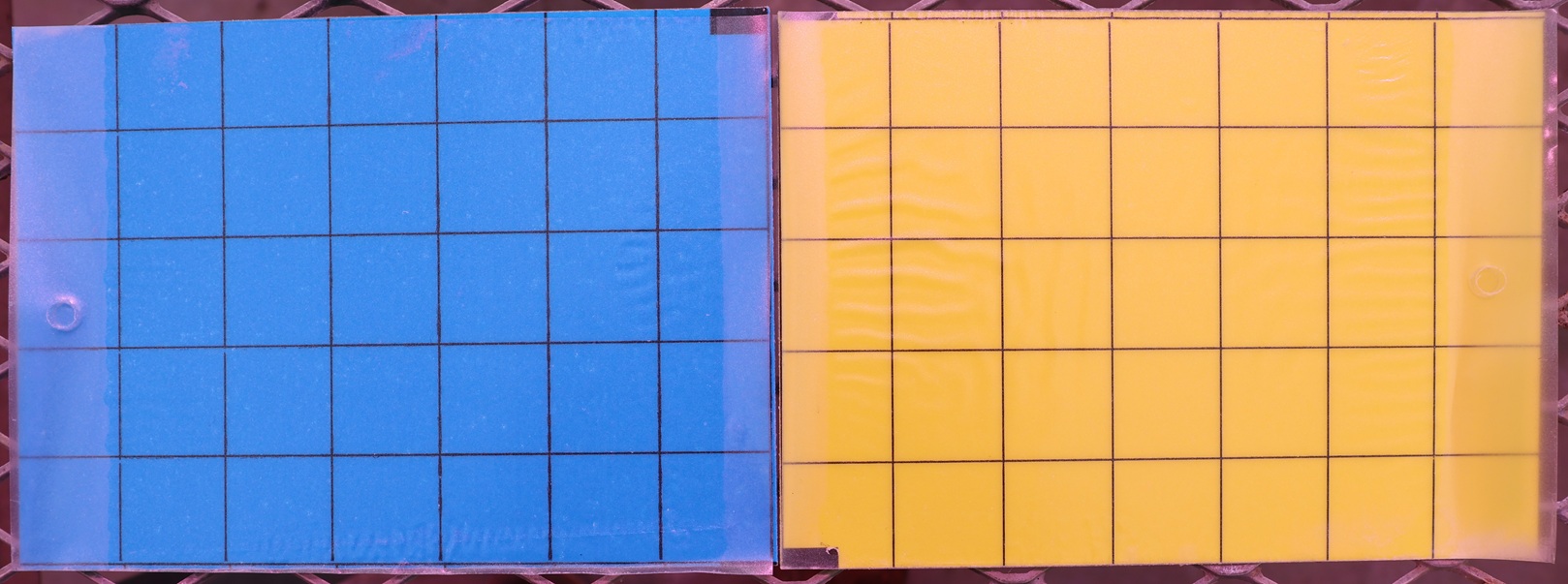
Sticky cards used for monitoring pest population levels; different insects are attracted to different colors.
Insect Pests
Aphids
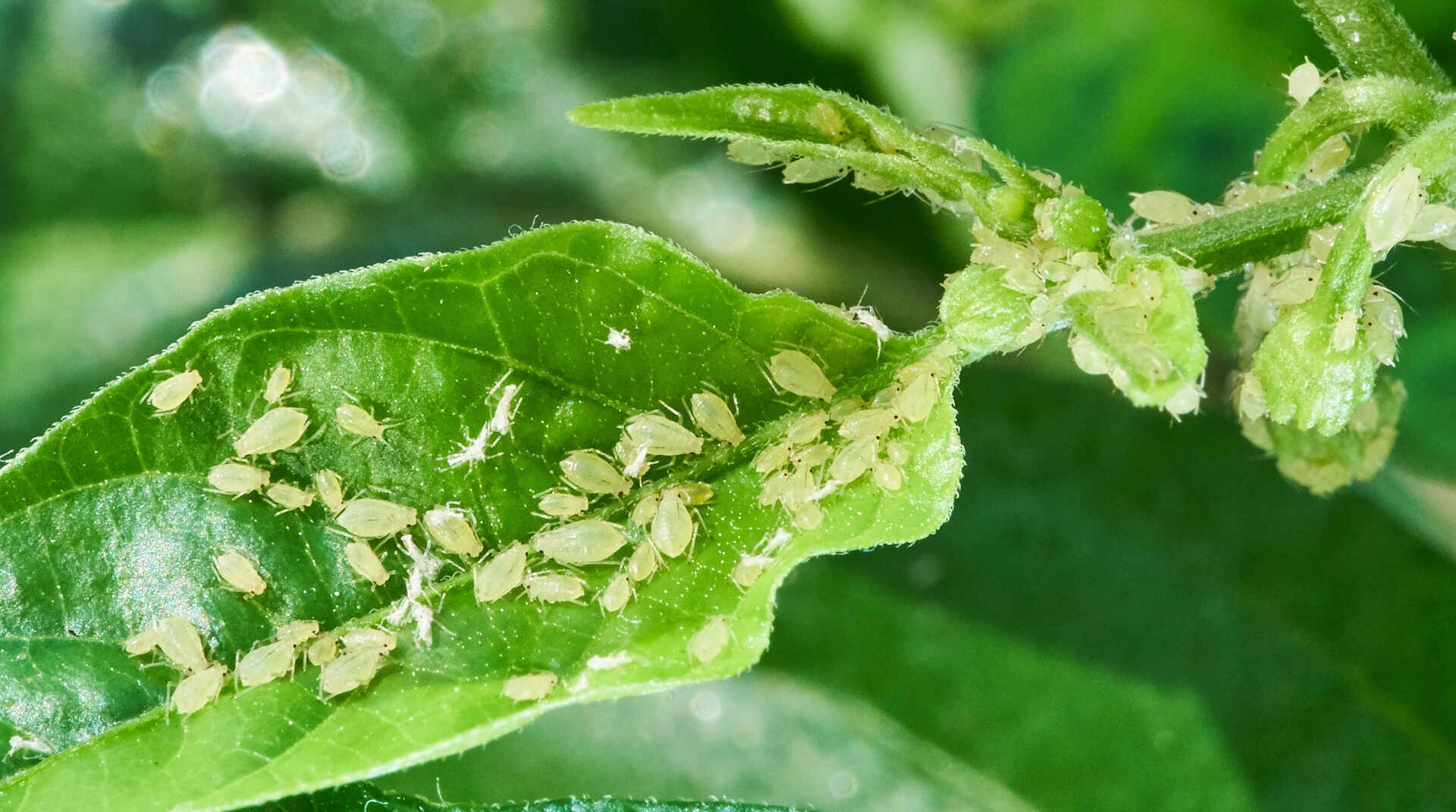
- Small soft-bodied insects with rounded bodies and long antennae; usually green to tan in color, but can also be red, orange, or black depending on the species
- Feed by piercing leaf tissue with their mouth parts and sucking the sap from the tissue
- Typically found clustered together in groups, often hidden on the underside of leaves
- Aphids secrete a sticky honeydew waste that can create small shiny specks on leaves; in larger infestations, leaves can become entirely shiny in appearance
- When population levels rise, aphids will start to produce winged offspring to disperse to other plants
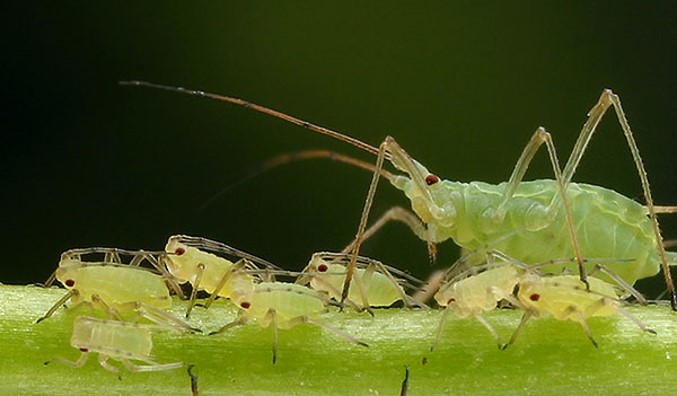
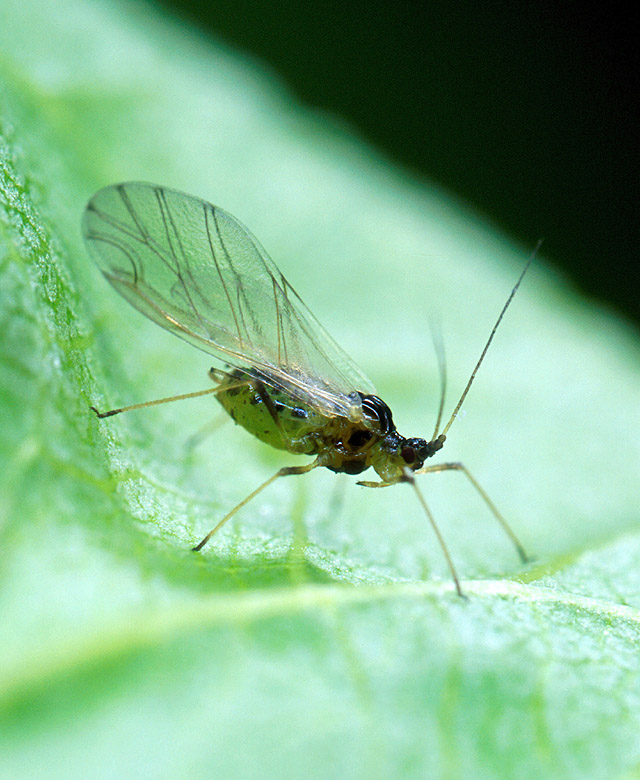
From left to right: An adult aphid with a group of immature aphids (called nymphs); and a winged adult aphid
Thrips
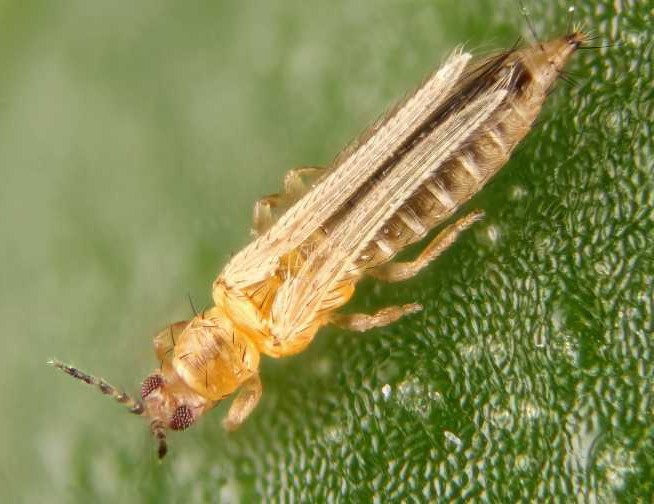
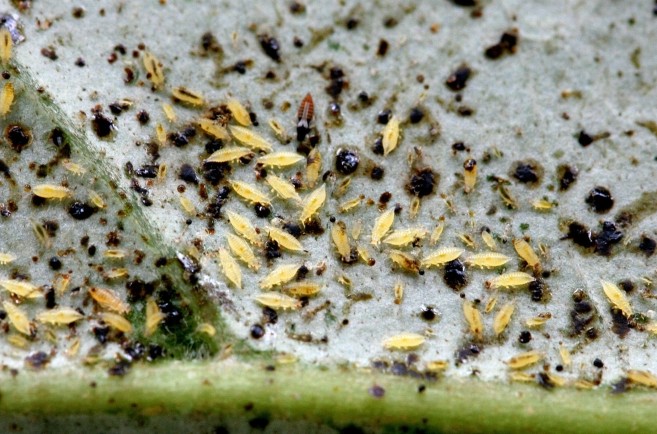
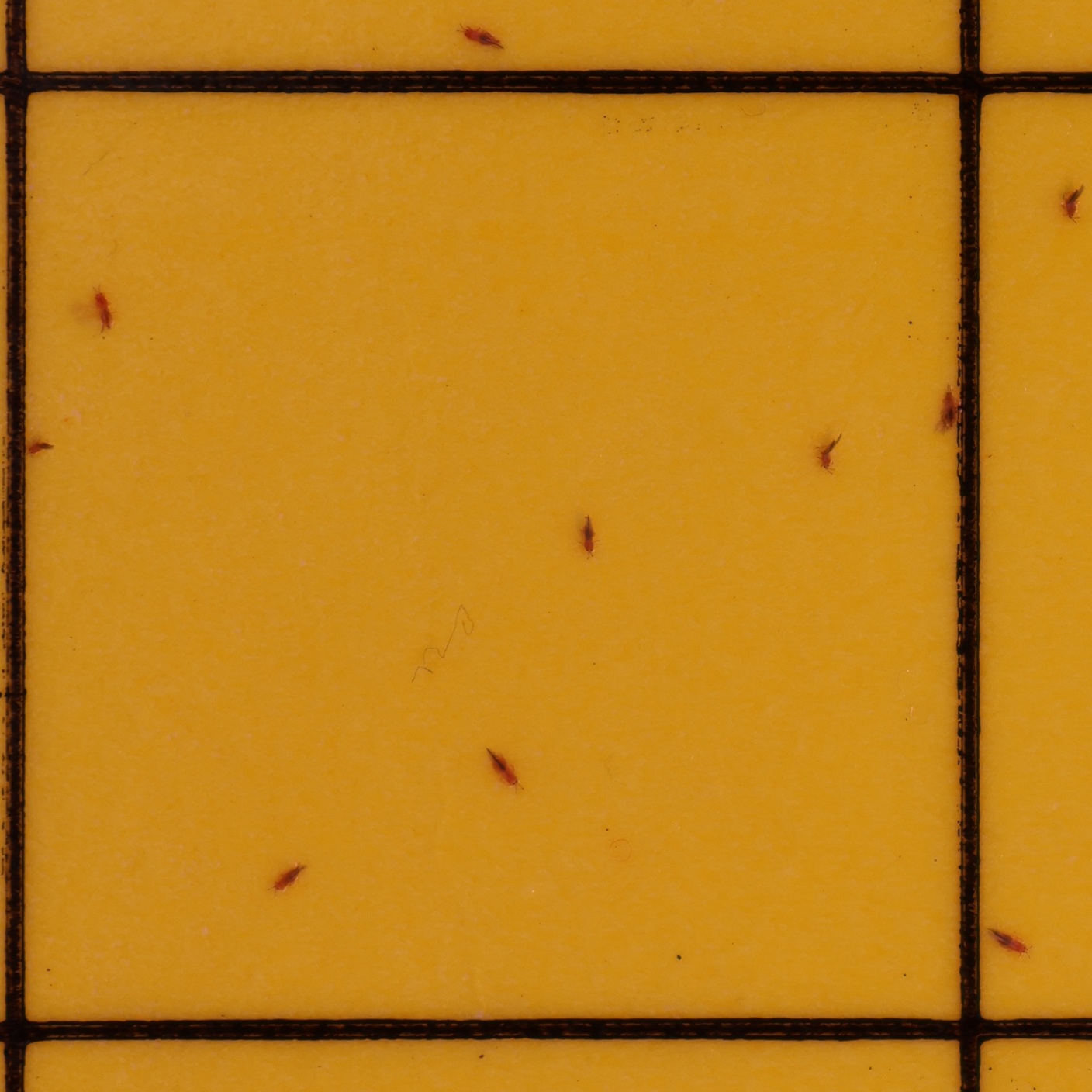
From left to right: close-up of an adult thrips; thrips on a leaf, with black frass visible; thrips on a sticky trap with a one-inch grid for size comparison
- Tiny yellow, brown, or black insects with long thin bodies, usually just visible to the naked eye
- Feed on the outer layer of plant tissue and sometimes consume pollen
- Damage appears as silver to tan scrape-like or patchy marks on the leaf surface, often with tiny black flecks of frass (waste) visible
- Large populations can scar or distort plant tissues and stunt plant growth
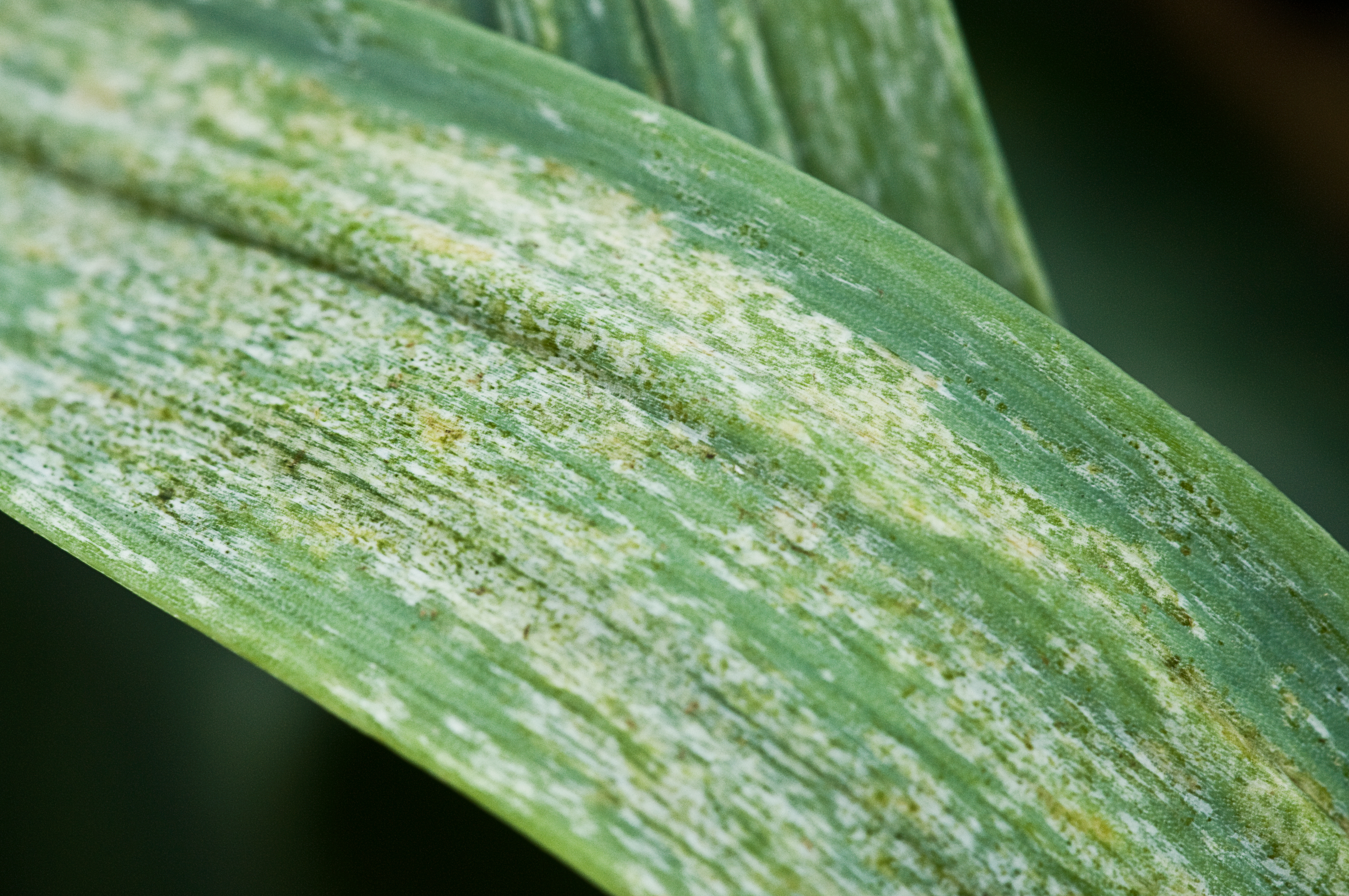
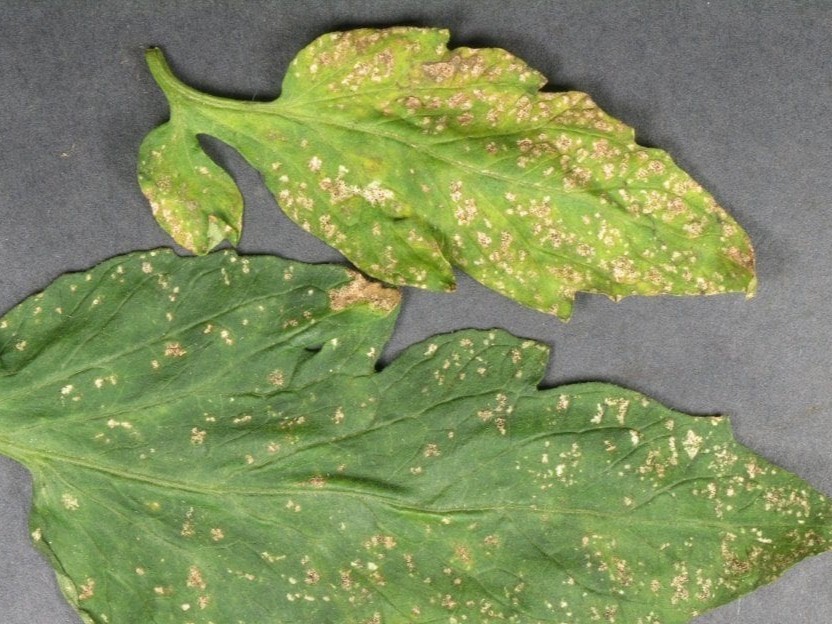
Thrips damage on leaf surfaces
Fungus Gnats
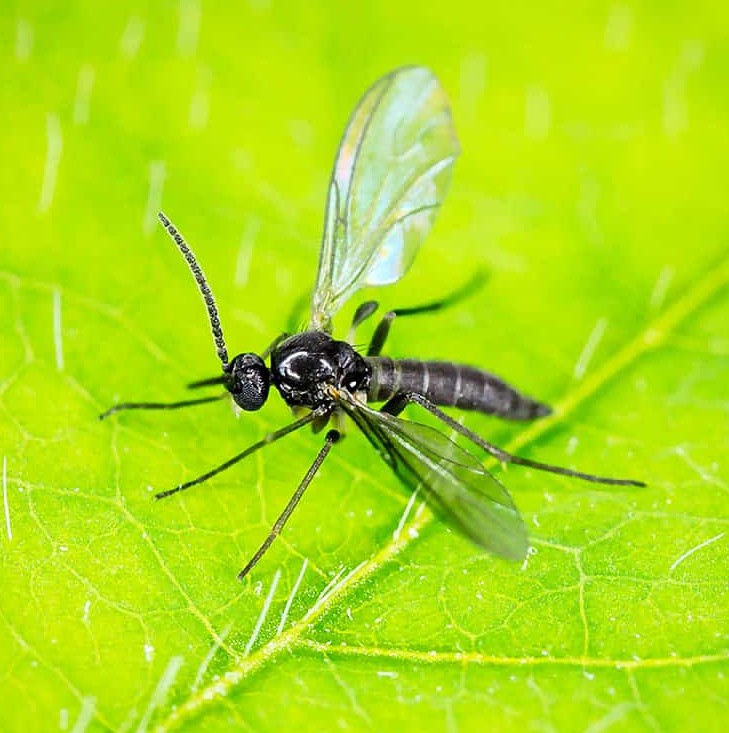
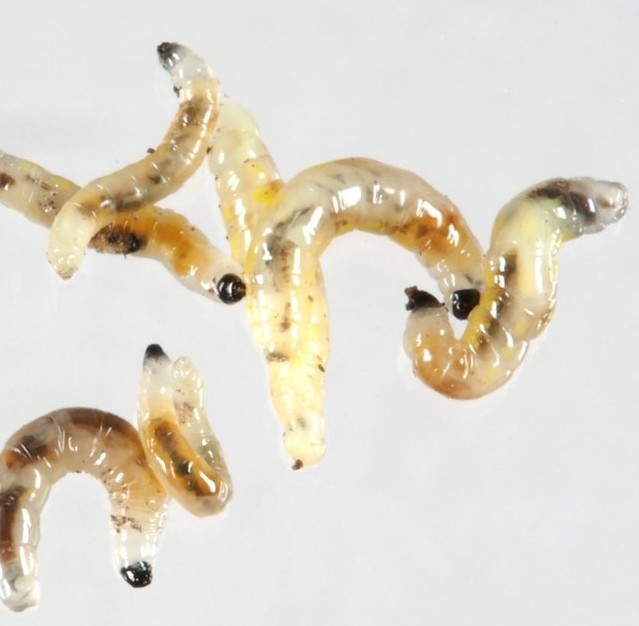
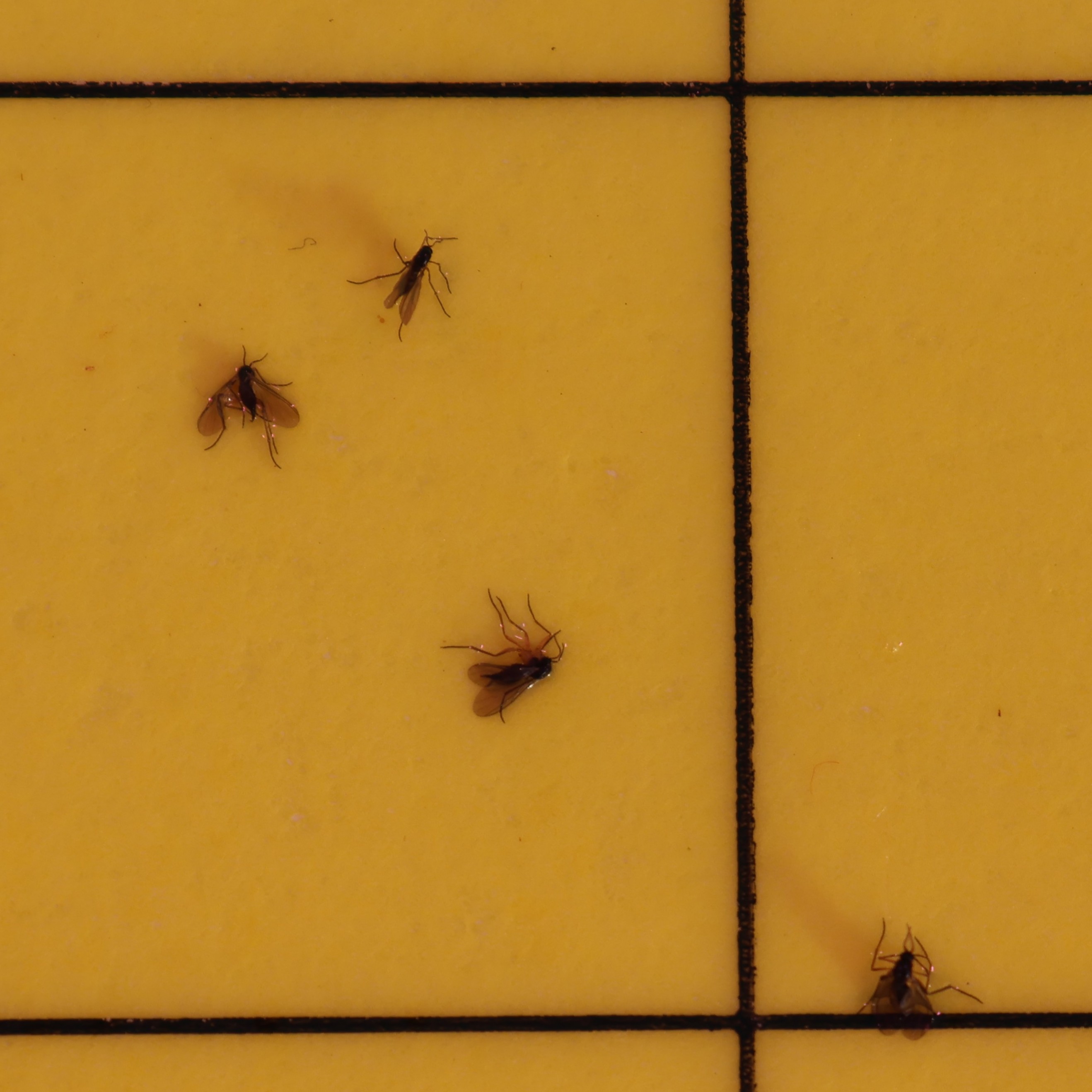
From left to right: an adult fungus gnat; fungus gnat larvae; fungus gnats on a sticky trap with a one-inch grid for size comparison
- Tiny black flying insects with long antennae and legs and a pointed abdomen
- Adults do not feed on plants and are mostly a cosmetic annoyance, but can vector fungal pathogens
- Larvae are small whitish or translucent grubs with visibly-distinct black heads that live in the soil and feed on fungi and decaying plant matter; can damage roots of smaller plants, and the damage can provide an entry point for fungal diseases
- Thrive in consistently-moist conditions; to reduce infestations, let top few inches of soil dry out between waterings and keep greenhouse floors cleaned of loose soil and algae
Shore Flies
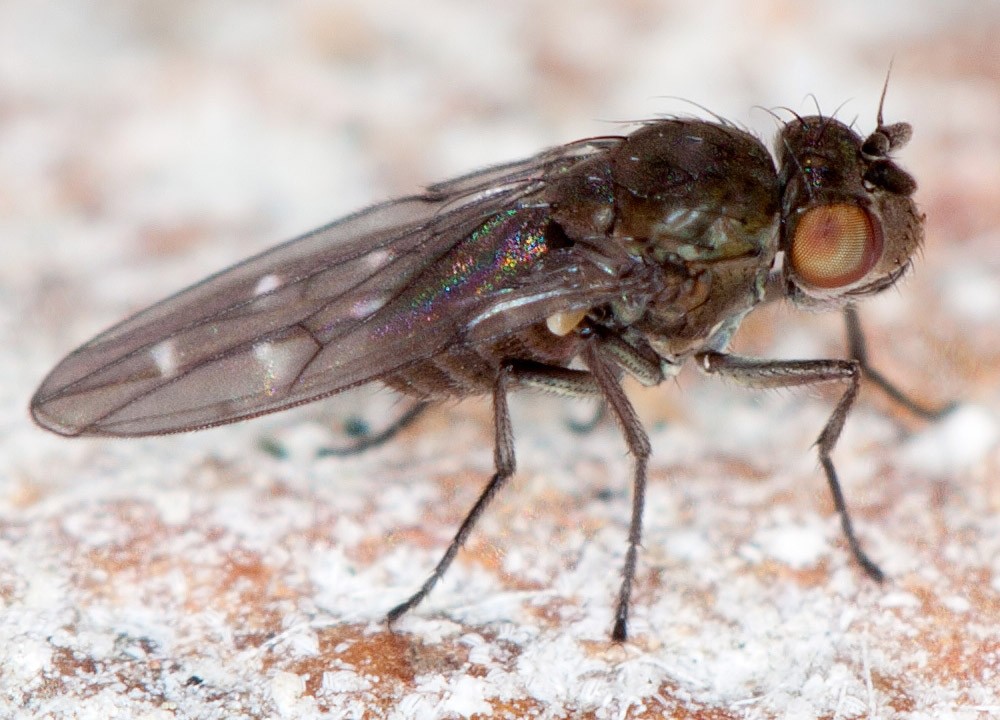
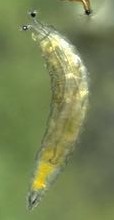
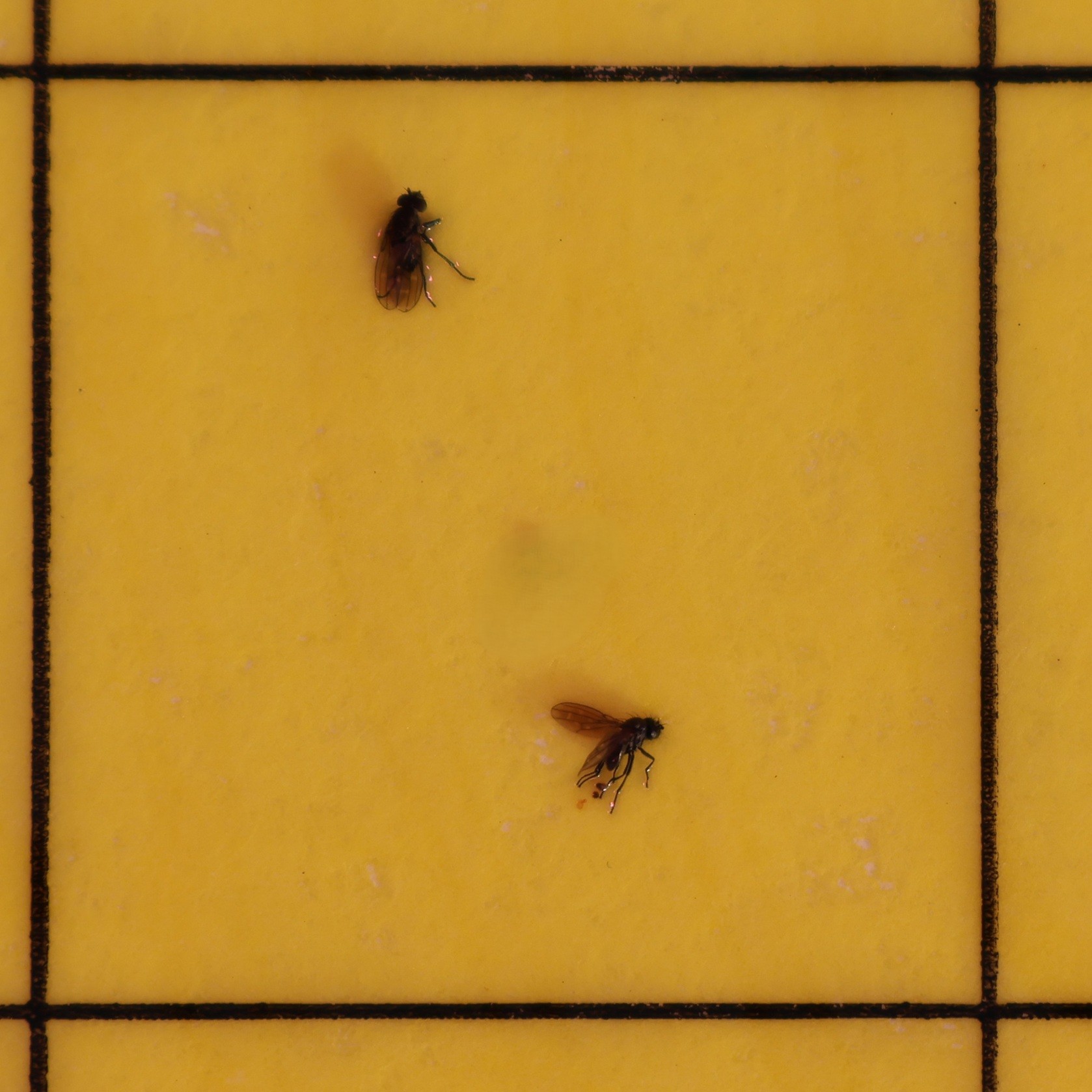
From left to right: an adult shore fly; a shore fly larva; shore flies on a sticky trap with a one-inch grid for size comparison
- Small stout flies with five white dots on their wings, very short antennae, and large eyes
- Adults do not feed on plants and are mostly a cosmetic annoyance, but can vector fungal pathogens
- Larvae are uniformly-tan grubs with no distinct head visible and live in the soil, but do not tend to damage plant roots
- Thrive in consistently-moist conditions; to reduce infestations, let top few inches of soil dry out between waterings and keep greenhouse floors cleaned of loose soil and algae
Mite Pests
Spider Mites
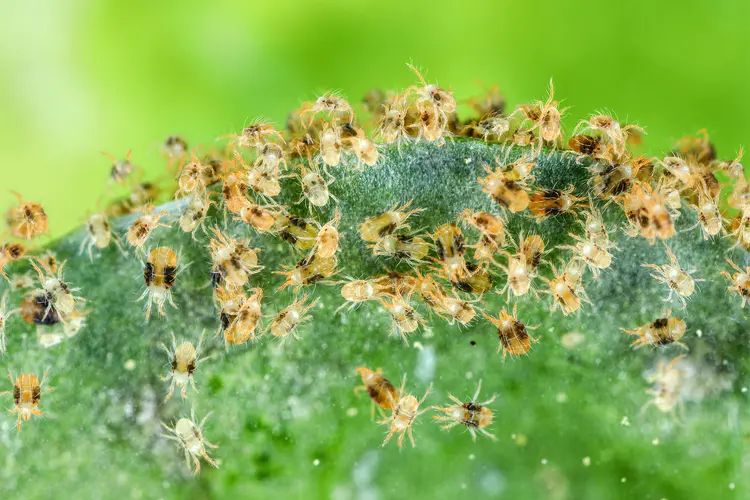
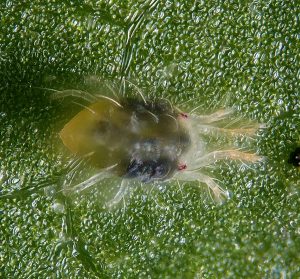
- Very tiny mite the size of a grain of sand, usually tan with two black spots; often hard to notice until the infestation is advanced
- Feed by piercing plant tissue with their mouth parts and sucking plant fluids
- Damage appears as fine yellow speckling across the leaf surface; in heavy infestations, damage can increase into patchy yellowed blotches
- Larger mite colonies create thin but visible webbing on and between plant leaves and stems, which in large infestations can fully envelop plants
- Thrive in hot and dry conditions
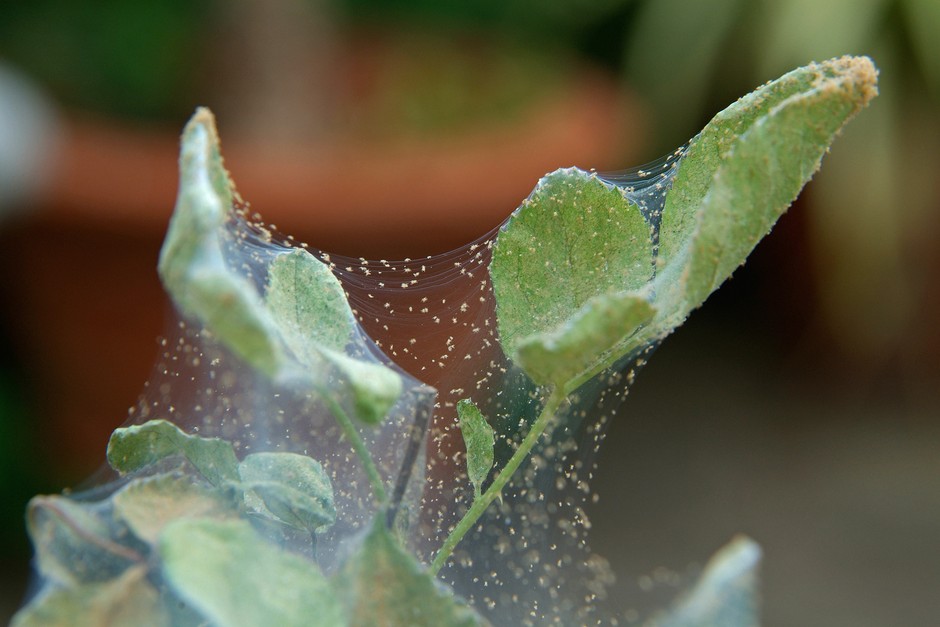
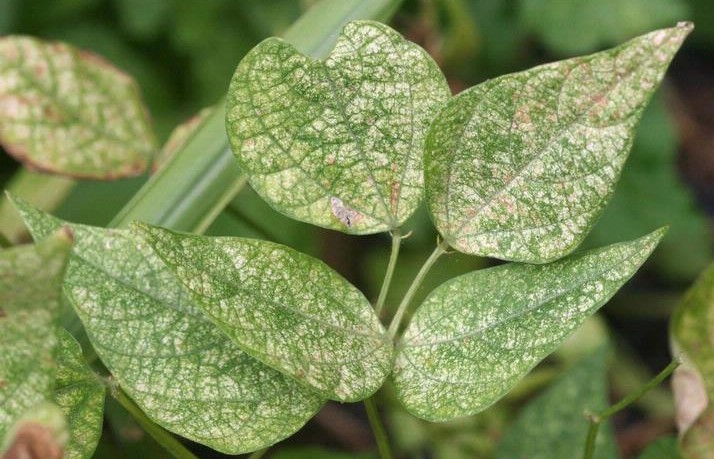
From left to right: spider mite webbing covering a plant, with mites visible in the webbing; and spider mite damage on leaf tissue
Fungal Diseases
Powdery Mildew
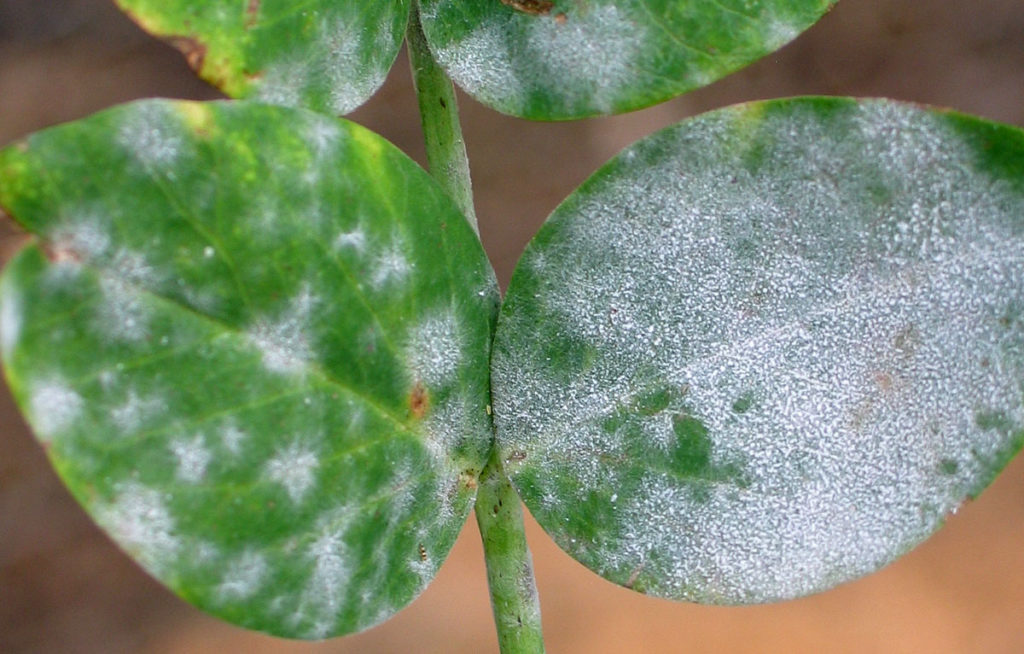
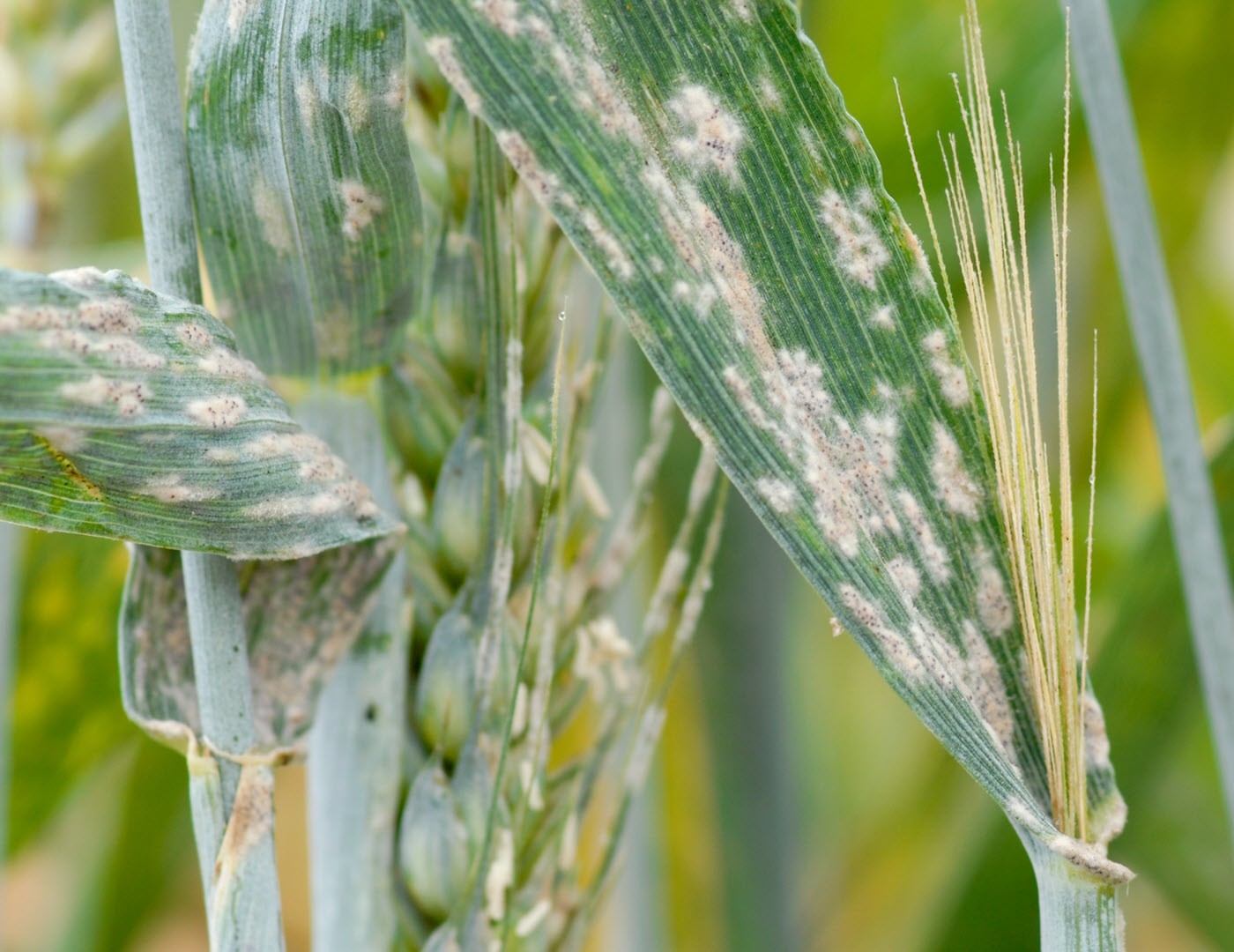
- Tan to white fungus with slightly raised, fuzzy or dusty appearance; develops on the surfaces of plant leaves and stems
- Severe infections can stunt, wilt, or distort plant growth and diminish photosynthesizing capabilities
- Thrives when days are warm and dry and nights are cool and humid
- Spores are easily spread by air currents to surrounding plants
- To reduce risk of development:
- water early in the morning so that the greenhouse is dry by nightfall
- ensure adequate spacing and air movement between plants to reduce humidity in the plant canopy